CRM, operations, HR, compliance, projects, approvals and the countless processes in between. Build or install the business software your company needs on one shared platform, without creating another isolated software stack every time.
Eight apps companies run on Cordango today, each a real app you can look at. The point is not the length of the list. It is that all of them belong to one company system.
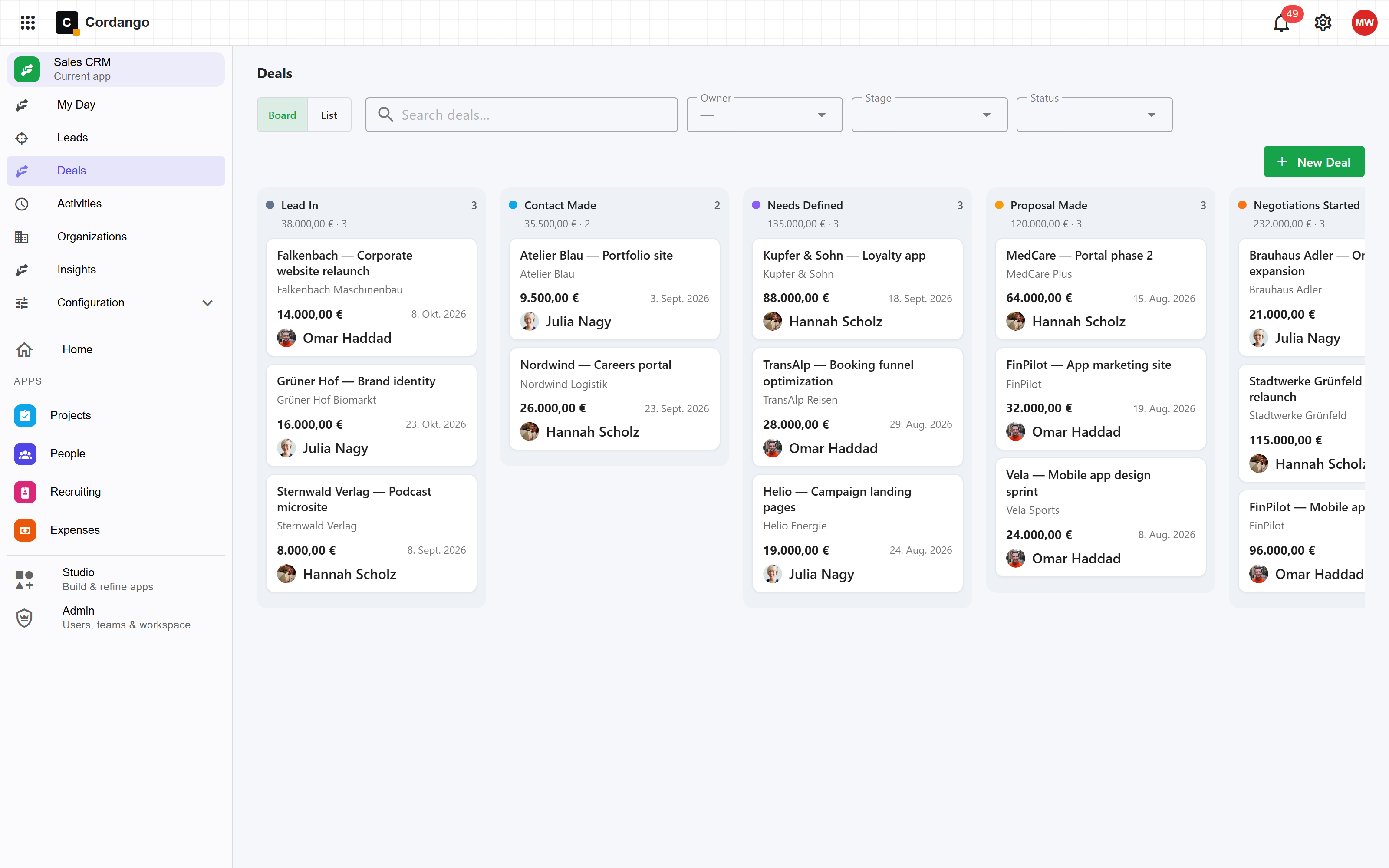
Deals on a board, a weighted forecast and a follow-up on every open deal, against one customer record the rest of the company reads. Works like Pipedrive.
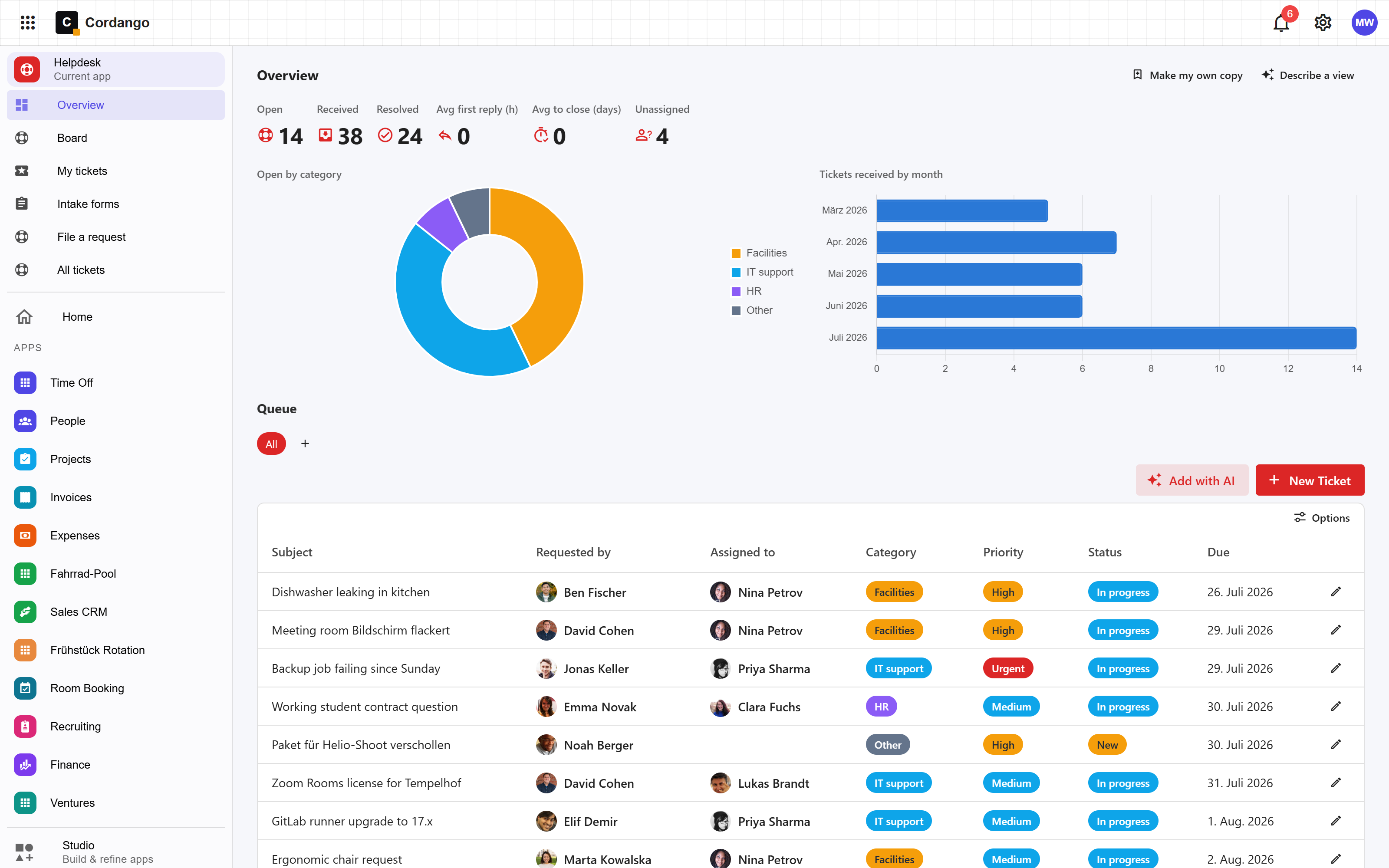
See the app →An inbox becomes a queue with statuses, an assignee and a history that outlives the thread. Works like Zendesk.
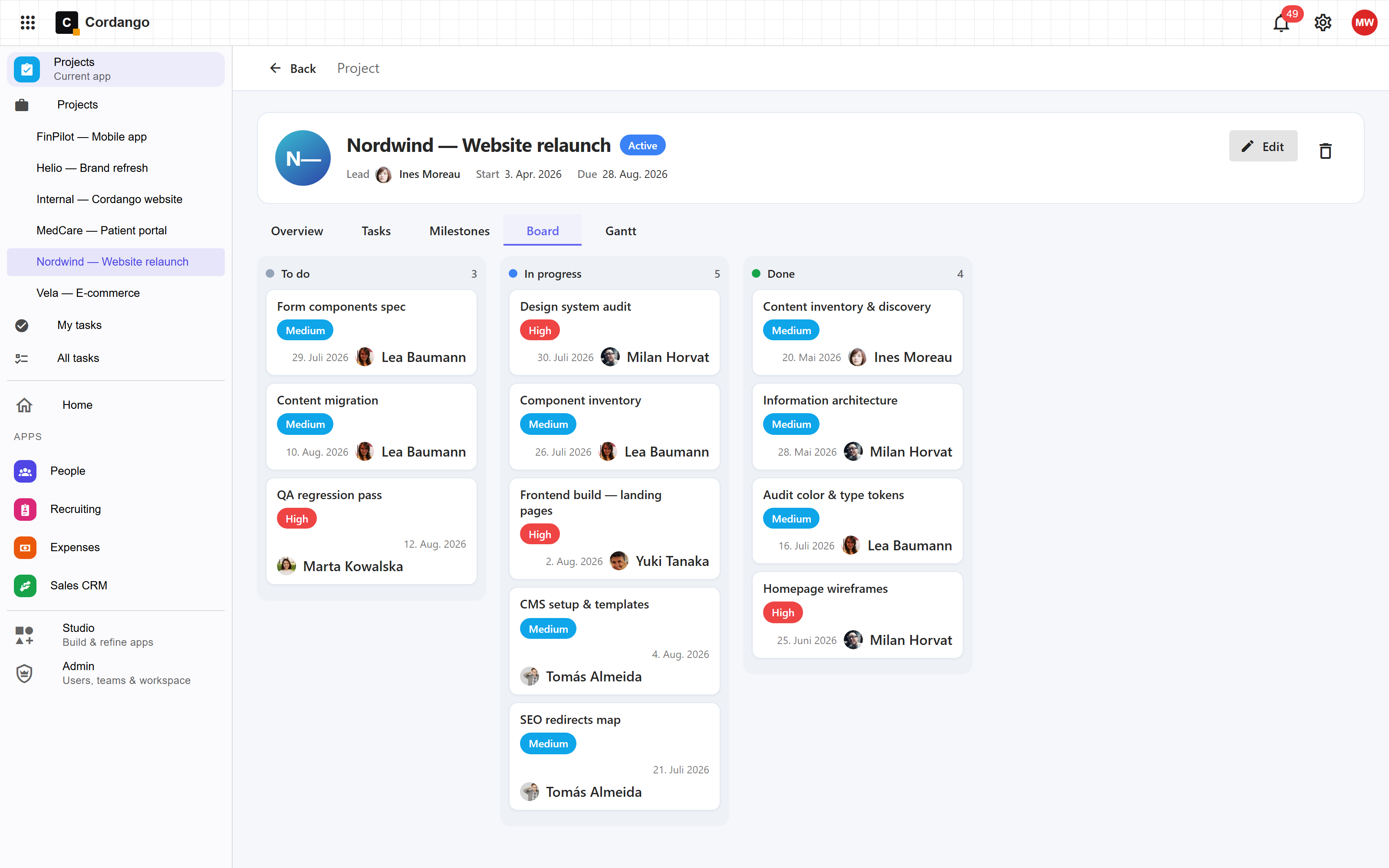
See the app →Tasks, a board, a timeline and cost rollups on projects that already know the customer they belong to. Works like Asana.
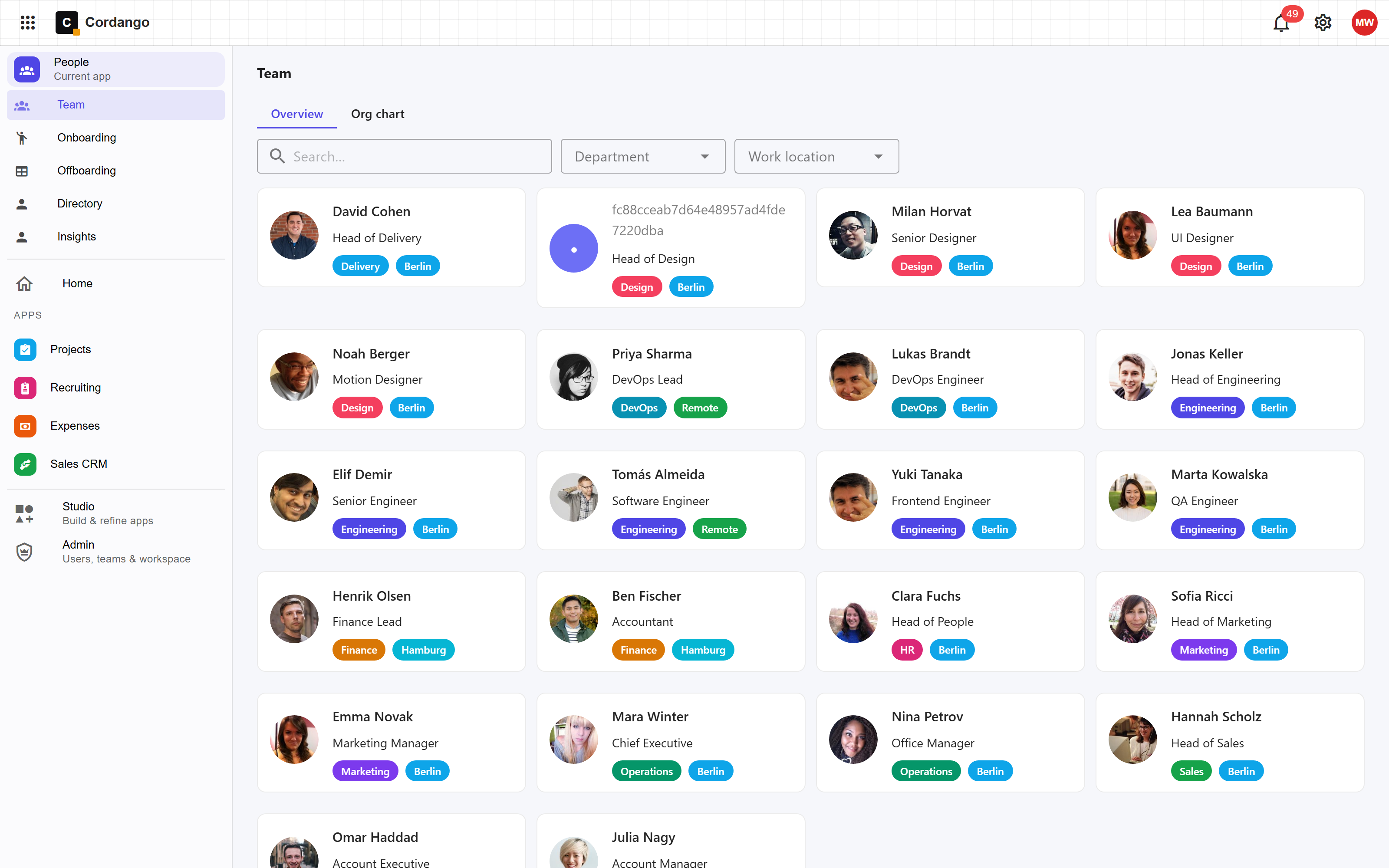
See the app →The employee file itself: records, documents, onboarding and history, as the directory everything else reads. Works like HiBob.
See the app →Requests, approvals on the real reporting line, and who is out this week, without a spreadsheet.
See the capability →A first week that is a checklist against a real person record, with the team and manager already right.
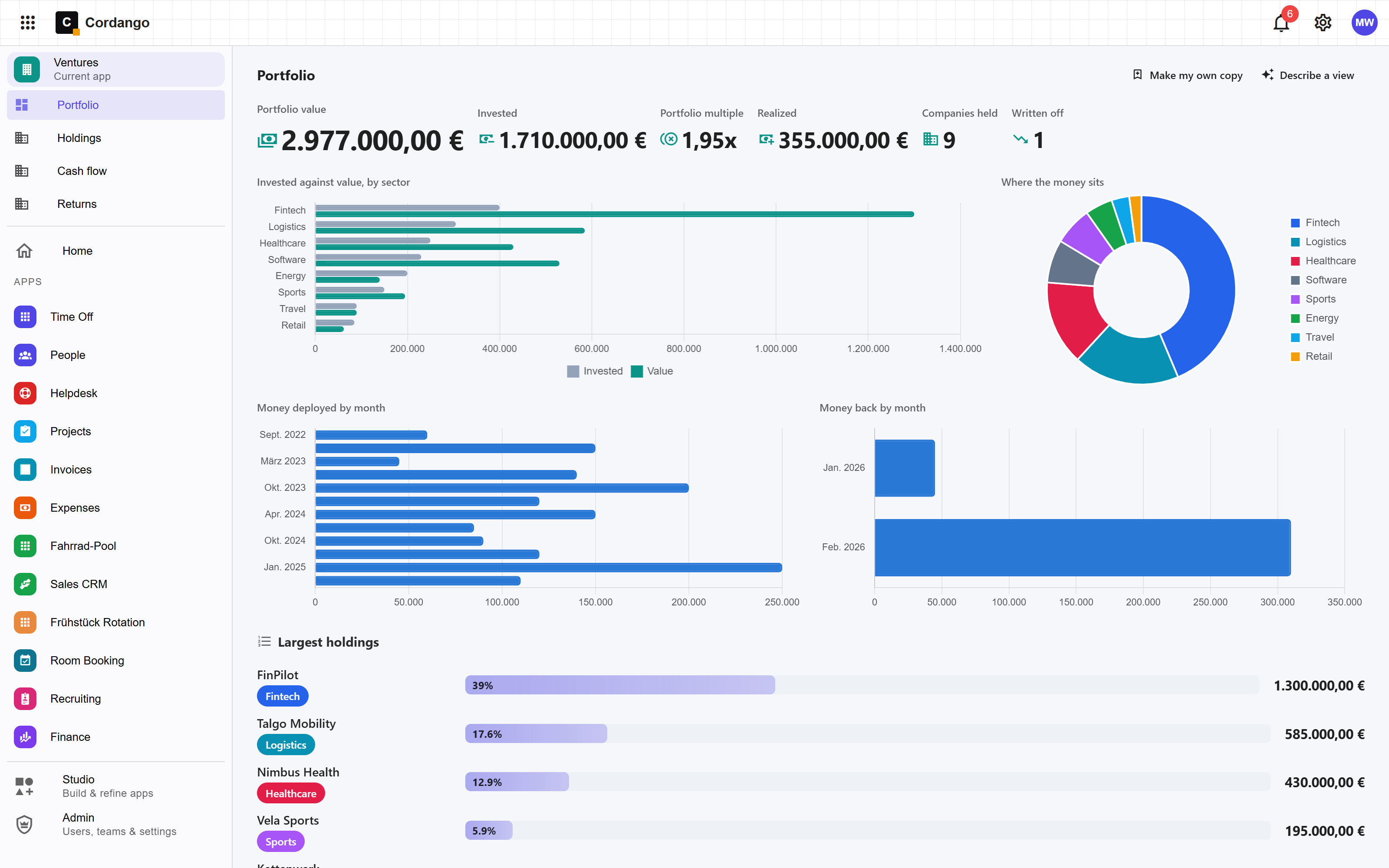
See the capability →Holdings, valuation marks, distributions and returns, on the same Organization records as everything else. Works like Carta.
See the app →Feedback cycles gathered against the people and reporting lines the company already has, not a survey tool.
See the capability →Underneath all of them: the same People, Organizations, Teams, Calendar and Files. An asset register added next month reads the same person record the PTO app already does.
Cordango does not only generate an app. A Cordango app is created already connected to the company platform, governed by the company security model, aware of shared company context, and portable beyond Cordango.
Works with other apps, workflows, external systems and agents from the first day, because the interaction surface is part of the app, not something wired on later.
Why this is true →Identity, roles, permissions, audit history and company ownership are already there. Nobody adds governance to an app afterwards.
Why this is true →Apps share the same people, organizations, teams, files and calendar. The person in PTO is the person in the CRM and in Projects.
Why this is true →The app is a definition you own. It runs here, or it builds into conventional software that leaves the platform with you, where the generator supports it.
Why this is true →The reason this is true: every app is an App Definition with an App Contract, running on one company platform. How an idea becomes an app →
Somebody has usually solved it before. Install an app another company already worked out, then change the parts where your company is different. It arrives working, on your own platform, with your people and permissions already in it.

The employee file your company runs on. Records, onboarding, time off and org insights.

Plan and track delivery across projects. Tasks, sections, a board, a timeline and cost rollups.

Move deals through a pipeline board with a weighted forecast and a follow-up on every open deal.

One queue for every request. Intake forms, assignment, a triage board and resolution times you can see.

Track every investment you hold. What went in, what it is marked at today, what came back and what it returned.
Describe the app in plain words. Cordango asks a few questions to learn how you work, then builds it: screens, workflow, permissions and a dashboard, hosted and secured, with your people already in it. If something is too involved to generate, we build it with you.
What arrives is a complete application, not a starting point you have to finish. Run it with real work for a week, then ask for the change.
Cordango apps do not simply sit next to each other. The deal in the CRM points at the same Organization record the support ticket and the delivery project point at, and the assignee on a task is the same person whose leave was approved. There is nothing to reconcile, because there was never a second copy of the company.
That is why a dashboard across every app is a view rather than an integration project, and why an assistant can answer a question no single app can, like which trial customers have an overdue invoice.
Publish your app to the library so other companies can install it and make it theirs. Creators do not set prices or sell subscriptions. Cordango rewards them when other companies genuinely use what they built.
Publish an app →The business app use cases companies build first, each with a real app behind it: a custom CRM, an internal helpdesk, onboarding, PTO, asset and project tracking.
See real use cases →A process that annoys everyone, turned into a working app in the demo. About 30 minutes, on a real company platform, with your permissions and your people in it.